
How Can I Find and Fix Energy Waste in a Small Commercial Building?
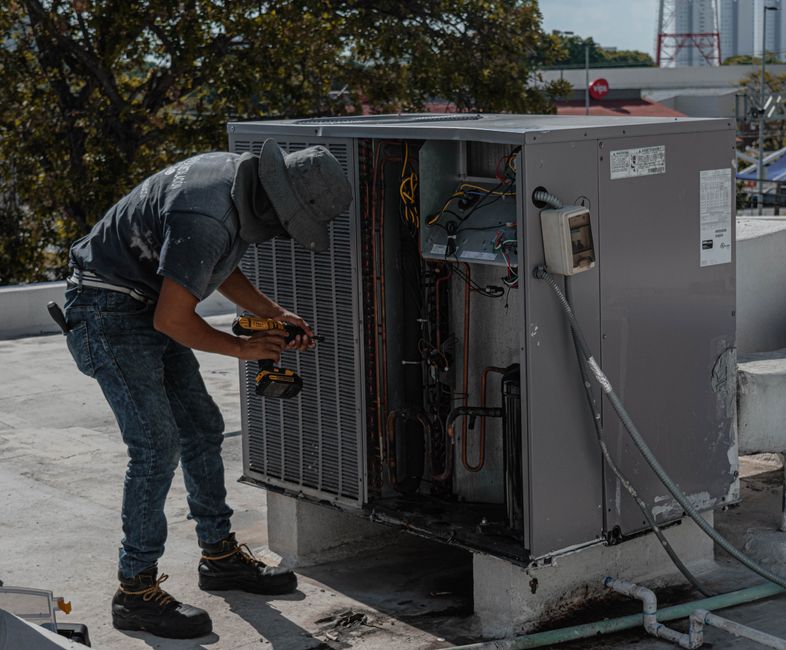
Start with 12 consecutive months of utility bills, then match changes in use and demand to floor area, occupancy, hours, and equipment. A walkthrough exposes low-cost waste; a Level 2 audit tests larger upgrades with costs, savings, operating effects, and simple payback. Rank work by verified savings, upfront cost, and operational risk rather than replacing equipment on instinct.
How do I find out what is causing my business energy bill to increase?
Build a baseline before you diagnose the bill. The U.S. Department of Energy says to gather 12 or more consecutive months of utility bills, and its guidance is blunt: “Gather 12+ months of consecutive utility bills for the selected buildings.”
Put each month in one record. Include electricity, gas, and any other fuel. Record total cost, energy use, the electric-demand reading in kilowatts, and demand cost where the bill shows it. The EPA's demand-tracking guide notes that bills often call the demand reading “Peak kW” or “On-Peak kW.” Energy use is one part of the bill. The fastest rate of use can be another.
Then add the facts that make a bill intelligible: year built, floor area, occupied share of the floor area, operating hours, and major equipment. DOE identifies each of these as useful context for benchmarking and audits. A bill rising after longer opening hours is not the same problem as a bill rising while hours and occupancy stay flat.
Use energy per square foot to compare one month with another and one building with another. DOE calls this energy use intensity, or EUI. It does not name the failed part. It tells you where to look.
The EPA describes benchmarking as comparing energy use with past consumption, similar buildings, or a reference level. For eligible property types, Portfolio Manager also adjusts its 1-to-100 score for weather and operating characteristics; 50 is median performance. The score is a signal. The bills and the building explain the signal.
| What to compare | What it can reveal | What to check next |
|---|---|---|
| Total energy use and cost | A change in consumption or utility rates | Hours, occupancy, fuel type, and equipment changes |
| Peak kW and demand cost | A short period of high simultaneous load | HVAC starts, refrigeration, lighting, and other loads running together |
| Energy use per square foot | Performance that is weak relative to the building's own history | Walkthrough findings and audit scope |
| Month-to-month pattern | A persistent issue or a one-month spike | Utility rate, weather context, operating assumptions, and maintenance records |
EPA says as much as 30% of the energy consumed in many small businesses is wasted. That figure is not a diagnosis for any one premise. It is a reason to stop treating a larger bill as a verdict.
Should I get an energy audit before replacing HVAC or lighting?
Yes: complete a walkthrough and bill review before committing to HVAC or lighting replacement, then use a professional audit when the decision exceeds what the walkthrough can settle.
Start with conditions that can be seen. Walk through occupied and unoccupied periods. Check lights left on, HVAC schedules, controls, refrigeration, maintenance needs, and loads that run overnight. ENERGY STAR recommends beginning with low- and no-cost walkthrough improvements before seeking a professional energy or water audit for opportunities beyond the business's capability.
Separate the work into three bins. No-cost changes alter schedules or operating practice. Maintenance corrects equipment or control problems. Capital upgrades replace or add equipment. These are not interchangeable. A new unit cannot make up for an unchecked schedule; a schedule change does not prove a replacement has poor value.
For a capital recommendation, ask for the installed cost, annual energy-cost savings, operating-cost savings, simple payback, and the assumptions behind each figure. DOE says audits can identify operational improvements, simple retrofits, and capital improvements, yet an audit alone does not guarantee implementation or savings. The paper is not the result. The work and its later bill performance are the result.
Check the utility before hiring outside help. DOE recommends finding out whether the utility offers a no- or low-cost audit before engaging an ESCO, engineering firm, or energy consultant. A utility rebate can lower the project cost. It should not decide the project by itself.
What utility bills and building information does an energy auditor need?
An auditor needs at least 12 consecutive months of bills plus the operating and building facts that explain those bills.
Give one meter entry for every fuel type used. The EPA Small Business Toolkit directs owners to collect the past 12 months of records and create an entry for each fuel type from utility-bill data. Include electric demand data as well when demand charges appear.
Give the auditor year built, floor area, occupied share of floor area, business hours, equipment information, and known changes in operations. DOE also advises checking estimates against actual utility rates, historical spikes, weather normalization, operating assumptions, and the realistic life of equipment. A savings claim without these inputs is an unfinished calculation.
Ask one question for every large number: what changed in the building when this number changed? The answer often separates a rate issue from a load issue, and a load issue from a control issue.
What is the difference between a walkthrough and a detailed energy audit?
A walkthrough finds obvious opportunities and produces initial estimates; a detailed audit measures and analyzes enough to rank practical upgrades with greater confidence.
DOE's Level 1 walkthrough includes utility-bill analysis, a brief building survey, no- and low-cost measures, initial cost-and-savings estimates, and simple payback. It is useful when the first task is finding waste and deciding whether deeper work is warranted.
A Level 2 audit adds a detailed survey, an energy-use breakdown, initial modeling, cost-and-savings analysis for practical measures, and operations-and-maintenance effects. DOE calls Level 2 the most common audit guideline for most buildings. This is the useful middle ground when a building owner must choose among repair, controls, lighting, or HVAC work.
Level 3 is for large, capital-intensive projects. It can include detailed field data, submetering, detailed modeling, and life-cycle-cost analysis. DOE lists historical illustrative audit-cost ranges per square foot of $0.03 to $0.10 for Level 1, $0.11 to $0.25 for Level 2, and $0.26 to $0.70 for Level 3. The agency also says actual cost varies with building complexity, size, and travel distance.
Audit depth should match the decision. A small fix needs a clear observation. A large replacement needs a traceable estimate.
Frequently Asked Questions
How do I calculate the payback period for an energy-efficiency upgrade?
Divide the investment by projected annual energy-cost savings. The U.S. Department of Energy defines this result as simple payback: the years required for projected annual energy-cost savings to equal the amount invested. Ask the auditor to show the implementation cost, savings estimate, utility-rate assumptions, and operating assumptions behind the result.
Can a small business reduce electricity costs by shifting use away from peak hours?
Yes, when the bill includes a demand charge and the business can reduce load during the utility's peak-demand period. ENERGY STAR advises tracking monthly demand in kilowatts and demand cost in dollars, then asking the utility about peak-demand programs and incentives. The bill may label the relevant reading “Peak kW” or “On-Peak kW.”
Are utility-sponsored energy audits worth using?
They are a sensible first option because DOE advises checking whether the utility offers a no- or low-cost audit before hiring an ESCO, engineering firm, or energy consultant. Use the audit as evidence, not a shopping list: request costs, annual savings, simple payback, assumptions, and operational effects for each recommendation. Utilities often support audit costs because they expect recommended measures to be installed afterward.
Sources
- U.S. Department of Energy, Office of State and Community Energy Programs
- U.S. Environmental Protection Agency ENERGY STAR, Small Business Toolkit
- U.S. Environmental Protection Agency ENERGY STAR, How to Track Electric Demand
- U.S. Department of Energy, Energy Audit Process and State Applications
- U.S. Department of Energy, Energy Audits and Retro-Commissioning Policy Design Guide
- U.S. Environmental Protection Agency ENERGY STAR, Benchmarking