
When Is Rectal Bleeding Hemorrhoids or a Fissure—and When Is It Serious?
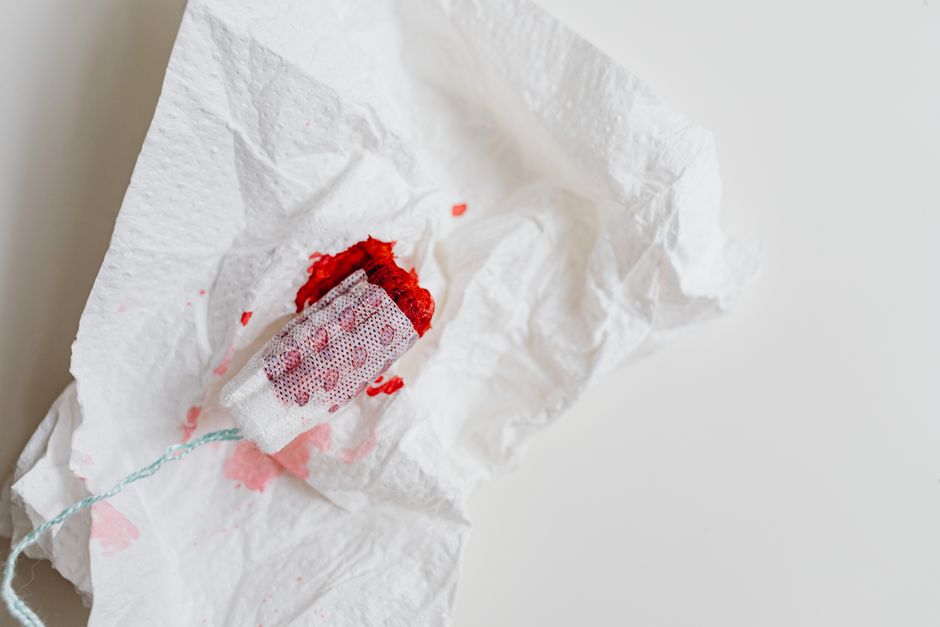
Bright red blood after a bowel movement can come from hemorrhoids or an anal fissure, but color alone cannot identify the source. Hemorrhoids often bleed without pain, while fissures commonly cause sharp pain during or after a bowel movement. Rectal bleeding that is heavy, continuous, mixed with stool, paired with severe abdominal pain, dizziness, fainting, or black tarry stool needs prompt medical assessment.
Use the pattern as a briefing note, not a verdict. The practical job is to notice what happened, what else came with it, and how quickly the situation needs assessment. The wrong shortcut is, “It is bright red, so it is only hemorrhoids.” The stronger version is, “I have bright red bleeding and these accompanying symptoms; what needs checking?”
Is bright red blood on toilet paper always hemorrhoids?
No. Bright red blood on toilet paper is a common hemorrhoid pattern, but it is not always hemorrhoids.
The National Institute of Diabetes and Digestive and Kidney Diseases explains that internal hemorrhoids can leave bright red blood on stool, toilet paper, or in the toilet bowl after a bowel movement. Internal hemorrhoids that have not prolapsed are most often not painful. External hemorrhoids can instead bring itching, tender lumps, or anal ache or pain.
That is useful context. It is not a clearance note. NIDDK explicitly cautions that not every anal symptom is caused by a hemorrhoid, and rectal bleeding can also occur with Crohn’s disease, ulcerative colitis, or cancer of the colon or rectum.
Blood on the paper tells you where to start asking questions. It does not tell you where to stop. If bleeding keeps returning or hemorrhoid-like symptoms persist after at-home treatment, NIDDK advises seeking medical help rather than running the same self-diagnosis again.
How can I tell whether rectal bleeding is from a fissure or hemorrhoids?
The clearest comparison is pain timing: a fissure commonly causes severe pain during and especially after a bowel movement, while internal hemorrhoids commonly cause painless bright red bleeding.
An anal fissure is a tear in the anus. According to the American Society of Colon and Rectal Surgeons, fissure pain can last from several minutes to a few hours after the bowel movement. A fissure can also produce bright red blood on toilet paper or stool. That overlap is the key operational point: blood color is not a reliable tie-breaker.
| Pattern to report | What the sources say it can fit | What not to conclude |
|---|---|---|
| Bright red blood on paper, stool, or in the bowl | Internal hemorrhoids can cause this pattern; fissures can also leave bright red blood. | That bright red blood proves hemorrhoids. |
| Severe pain during or after a bowel movement | Anal fissures typically cause this pattern. | That pain rules out every other cause without an examination. |
| Itching, a tender lump, or anal ache | These may occur with external hemorrhoids. | That bleeding is therefore harmless or unrelated. |
| Painless bright red bleeding or prolapse | These are common features of symptomatic internal hemorrhoids. | That a serious condition cannot resemble hemorrhoids. |
The efficient move is to report the full pattern. A useful script is: “The blood is bright red, it appears on the paper or stool, and I do or do not have sharp pain during or after a bowel movement.” Add whether the bleeding is recurring, whether stool looks black or tarry, and whether there is abdominal pain or lightheadedness. That reduces guesswork at the visit.
Do not turn bowel comfort into a scavenger hunt for a single fix. Fissure guidance from the American Society of Colon and Rectal Surgeons includes conservative measures and fiber as part of treatment, while persistent or unusual fissures need assessment. For practical context on constipation choices, see Should I Choose Kiwi, Prunes, or Psyllium for Constipation?.
When should I see a doctor about blood in my stool?
Medical assessment is warranted for rectal bleeding, and emergency care is warranted when bleeding is continuous or heavy, or when it comes with severe abdominal pain or cramping, fainting, confusion, cold clammy pale skin, rapid shallow breathing, or low urine output.
The NIDDK guidance on gastrointestinal bleeding makes the escalation line clear: acute or severe GI bleeding needs medical help right away. It lists black or tarry stool, dark or bright red blood mixed with stool, and symptoms such as dizziness, fatigue, and shortness of breath among warning patterns. Shock symptoms require emergency help.
Mayo Clinic similarly advises immediate emergency assessment for continuous or heavy rectal bleeding or bleeding accompanied by severe abdominal pain or cramping. The issue is not whether hemorrhoids are common. They are. The issue is whether the current bleeding pattern could require urgent assessment.
Use this escalation ladder:
- Emergency assessment: Continuous or heavy bleeding; severe abdominal pain or cramping; fainting, confusion, cold clammy pale skin, rapid shallow breathing, or low urine output.
- Prompt medical assessment: Blood that is mixed with stool, black or tarry stool, recurring bleeding, or bleeding accompanied by fatigue, pale skin, shortness of breath, dizziness, or lightheadedness.
- Clinical follow-up instead of assumption: Symptoms that persist despite at-home measures, or any bleeding being written off as hemorrhoids without examination.
Persistent bleeding has a hidden cost: it can delay the correct explanation. NIDDK notes that chronic GI bleeding can lead to anemia over time, with fatigue, pale skin, and shortness of breath. The sensible replacement for “I will wait and see indefinitely” is “I will document the pattern and arrange an assessment.”
What to expect at a rectal bleeding assessment
A clinician typically starts with the information that changes the next decision: symptoms, medicines, personal medical history, and family history. NIDDK notes that this review can include nonsteroidal anti-inflammatory drugs and blood thinners, because medications belong in the clinical picture.
The examination may include vital signs, an abdominal examination, and a digital rectal examination. For suspected hemorrhoids, the American Society of Colon and Rectal Surgeons says evaluation commonly includes external inspection, a digital rectal examination, and anoscopy. The aim is not to label every symptom quickly. It is to locate the likely source and avoid missing another cause.
Testing is selected by the pattern, not by a one-size-fits-all checklist. NIDDK states that stool tests can identify occult blood and blood tests can help assess bleeding severity and whether anemia is present. Colonoscopy can view the rectum and the entire colon; clinicians may take biopsies and can sometimes treat active bleeding during endoscopy. Imaging or other tests may be used when the clinical situation calls for them.
Bring a clean symptom log. Record when bleeding occurs, whether it is on paper, in the bowl, streaked on stool, or mixed with stool; whether pain occurs; and whether you have abdominal symptoms, fatigue, dizziness, or shortness of breath. That is not self-diagnosis. It is better input for the examination.
Frequently Asked Questions
Can hemorrhoids cause blood mixed into stool?
Hemorrhoid bleeding may appear on toilet paper, drip into the bowl, or streak the outside of stool, according to the American Society of Colon and Rectal Surgeons. Dark or bright red blood mixed with stool is also listed by NIDDK as a possible sign of acute GI bleeding, so that pattern is not proof that hemorrhoids are the source. A clinician can assess the bleeding pattern in context.
Does rectal bleeding with abdominal pain need urgent care?
Severe abdominal pain or cramping with rectal bleeding warrants immediate emergency assessment, according to Mayo Clinic. NIDDK also lists abdominal cramps or pain, dizziness, fainting, fatigue, and shortness of breath among symptoms that can accompany acute GI bleeding. Continuous or heavy bleeding raises the urgency further.
What tests might a doctor order for ongoing rectal bleeding?
An evaluation may include a medical history, examination of the anal area, a digital rectal examination, and anoscopy. NIDDK explains that stool and blood tests can help identify occult bleeding, assess bleeding severity, and check for anemia. Depending on the situation, clinicians may use colonoscopy, other endoscopy, or imaging to locate and identify the cause.
Sources
- National Institute of Diabetes and Digestive and Kidney Diseases: Symptoms and Causes of Hemorrhoids
- American Society of Colon and Rectal Surgeons: Anal Fissure Expanded Information
- American Society of Colon and Rectal Surgeons: Hemorrhoids Expanded Information
- National Institute of Diabetes and Digestive and Kidney Diseases: Symptoms and Causes of GI Bleeding
- National Institute of Diabetes and Digestive and Kidney Diseases: Diagnosis of GI Bleeding
- Mayo Clinic: Rectal Bleeding, When to See a Doctor
Disclaimer: This article is for general information only and is not medical advice. It is not a substitute for diagnosis or treatment by a qualified healthcare professional. Always speak to your doctor before acting on anything you read here.