
What Should I Eat Mid-Morning to Stay Full While Losing Fat?
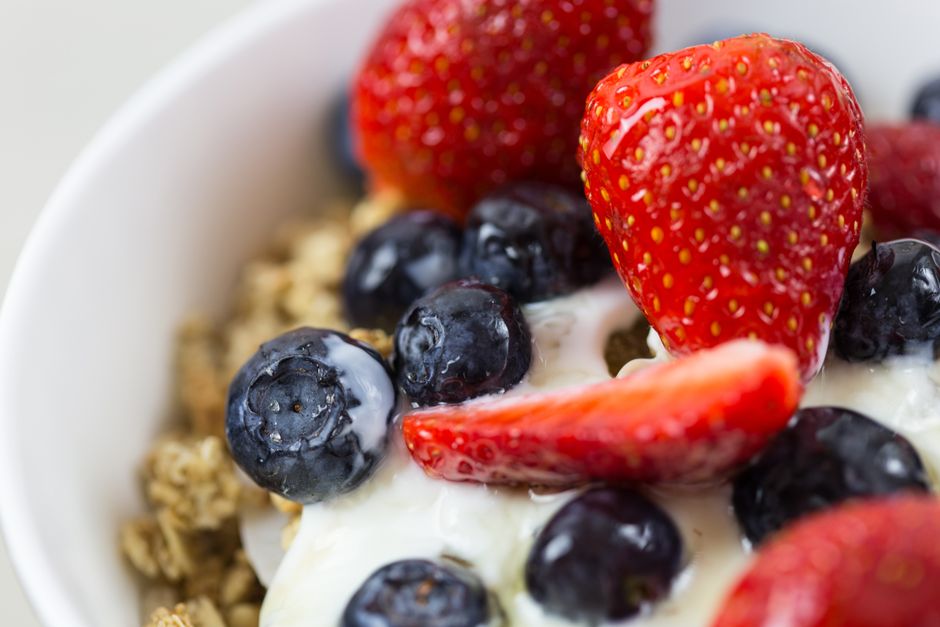
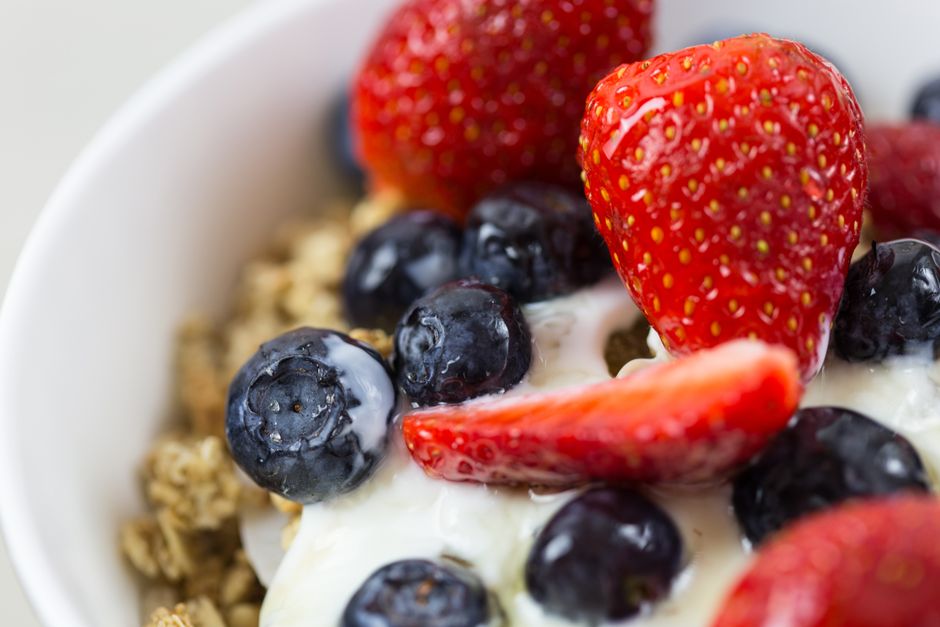
For a filling mid-morning snack, pair a protein food with fruit, vegetables, or a whole-grain option—for example, plain yogurt with berries or an egg with whole-grain crackers. A snack is optional: use it when hunger or a long gap before lunch makes it useful. Harvard’s general guide is about 150–250 calories, adjusted to satisfy without spoiling your next meal.
What can I eat mid-morning that will keep me full until lunch?
Choose a protein food alongside a fiber-rich fruit, vegetable, or whole grain. That gives the snack a job: bridge the gap to lunch, rather than add a handful of unplanned bites that do little to satisfy.
Practical combinations include plain unsweetened yogurt with berries, an egg with whole-grain crackers, or chopped carrots, celery, or cucumbers with a portion of nuts or seeds. The CDC’s healthy-eating guidance includes these kinds of portable choices, and highlights protein foods, fruits and vegetables, and fiber-rich whole grains.
There is some evidence that snack composition matters. A randomized crossover study of 23 women compared a higher-protein, higher-fiber bar with an isocaloric high-fat, high-sugar bar. At the buffet lunch, participants ate 5% less energy after the higher-protein, higher-fiber bar, according to the PubMed study published in 2006. It was a small, short-term study of specific bars—not proof that every protein snack will keep every person full until lunch.
Another study followed 107 women with normal-weight obesity for six months. The soy snack provided 18.2 grams of protein and 210 calories; the comparison fruit snack had less than 2 grams of protein and about 210 calories. The soy-snack group reported a greater reduction in appetite, but this specific population and intervention do not establish that everyone needs a snack or that all high-protein options work alike (Nutrients via PubMed Central, 2021).
Use the evidence as a design cue, not a prescription: pair protein with produce or whole grains, then check whether the combination actually carries you to lunch comfortably.
Should I snack between meals if I’m trying to lose fat?
No—snacking is not mandatory for fat loss. Decide based on hunger, your schedule, and the time until your next meal; a snack can help when several hours separate meals, but grazing without hunger can add food without solving a real problem.
The Harvard T.H. Chan School of Public Health’s Nutrition Source says research has not shown a clear overall positive or negative effect of snacking on health outcomes. What matters is what you eat, why and how often you snack, and how the habit fits into your overall eating pattern.
Run a quick check before reaching for food:
- Check hunger. Is this physical hunger, or is food simply available?
- Check the clock. How long is it until lunch, and will a snack help you manage that gap?
- Check the portion. Can a planned serving do the job without turning into continuous grazing?
If you are not hungry and lunch is soon, skip the snack. If you are hungry and the next meal is a long way off, choose a measured combination that is satisfying. The useful rule is flexibility: make the snack answer a need, rather than follow a schedule just because it is mid-morning.
How many calories should a weight-loss snack have?
Harvard’s general guide is about 150–250 calories for a snack, but it is a starting range, not a required target for every person. The right portion is enough to satisfy without interfering with your next meal or adding more energy than fits your eating pattern.
Harvard’s snack guidance gives that general range and advises checking package serving sizes: a package can contain more than one serving. Harvard Health Publishing offers examples around 150–200 calories, such as an apple or pear with 12 almonds, plain Greek yogurt with berries, or a hard-boiled egg with 12 almonds. These are examples, not fixed prescriptions; brands and serving sizes vary.
Nuts and nut butter are convenient, but they are easy to keep eating while distracted. The CDC recommends putting a snack in a bowl or container instead of eating from the package. That simple portioning step makes the amount visible before the snack starts. For spreads, measure the serving you plan to use and pair it with fruit or whole-grain crackers rather than eating directly from the jar.
| Situation | Practical move | Why it helps |
|---|---|---|
| Lunch is soon and you are not hungry | Skip the snack | Snacking is optional; there is no need to eat by the clock. |
| You are hungry and lunch is hours away | Choose a protein-plus-produce or whole-grain combination | It gives the snack a clear purpose and combines useful food groups. |
| You choose nuts, seeds, or nut butter | Portion it into a bowl or container | It makes the amount easier to see than eating from a package. |
| You want a calorie reference | Use about 150–250 calories as Harvard’s general guide | Adjust for satisfaction and appetite at the next meal. |
Use the number as a guardrail, not a pass-or-fail rule. If a small snack leaves you distracted and hungry, reassess the combination; if a snack dulls your appetite for lunch, reduce it or skip it next time. A few observations about hunger and timing will tell you more than treating one calorie figure as universal.
Frequently Asked Questions
Are protein and fiber more filling in a snack?
They can make a snack more satisfying, especially when paired together. In a small crossover trial of 23 women, a higher-protein, higher-fiber bar was followed by 5% lower energy intake at lunch than a comparison bar (PubMed, 2006); that short-term result does not guarantee the same effect for everyone.
Can healthy snacks still make you gain weight?
Yes. Nutritious foods still contribute energy, and portions or frequent snacks that add excess calories can contribute to unwanted weight gain. Portion the amount you intend to eat and consider whether you are hungry and when your next meal is.
What are quick mid-morning snacks I can take to work?
Portable choices include unsweetened yogurt with fruit, nuts or seeds portioned into a small container, whole-grain crackers, or washed and chopped carrots, celery, and cucumbers. The CDC also lists canned fruit without added sugars as a convenient option.
Sources
- Harvard T.H. Chan School of Public Health, The Nutrition Source: Snacking
- Centers for Disease Control and Prevention: Healthy Eating for a Healthy Weight
- Nutrients via PubMed Central: Soy-enriched high-protein snack study
- PubMed: Higher-protein, higher-fiber snack bar study
- Harvard Health Publishing: Low-calorie snacks
Disclaimer: This article is for general information only and is not medical advice. It is not a substitute for diagnosis or treatment by a qualified healthcare professional. Always speak to your doctor before acting on anything you read here.
Related reading
How Can You Tell If Weight Loss Has Really Plateaued?
Learn how weekly weight averages separate a real fat-loss plateau from water shifts—and how to troubleshoot without drastic calorie cuts.
Can Certain Foods or Diets Lower Cancer Risk?
What research says about cancer and diet, including plant-rich patterns, processed meat, soy and sugar—and why no single food is a proven cure.
Should I Choose Kiwi, Prunes, or Psyllium for Constipation?
Compare kiwi, prunes, and psyllium for constipation based on bloating, stool softness, fiber tolerance, and fluid intake.
What Can I Eat for Breakfast to Get More Iodine?
A practical iodine-aware breakfast guide for dairy-free and plant-based eaters, with label checks and seaweed guardrails.